Violence
Question: How does light pollution affect people living in cities? How can it be given a more poetic meaning?
Light and humanity share a complex relationship. Whether natural or artificial, light forms the foundation of our visual perception and shapes the atmosphere of our living spaces. However, light is more than just a function; it carves shapes from darkness, accentuates edges and transforms the ordinary into the extraordinary.
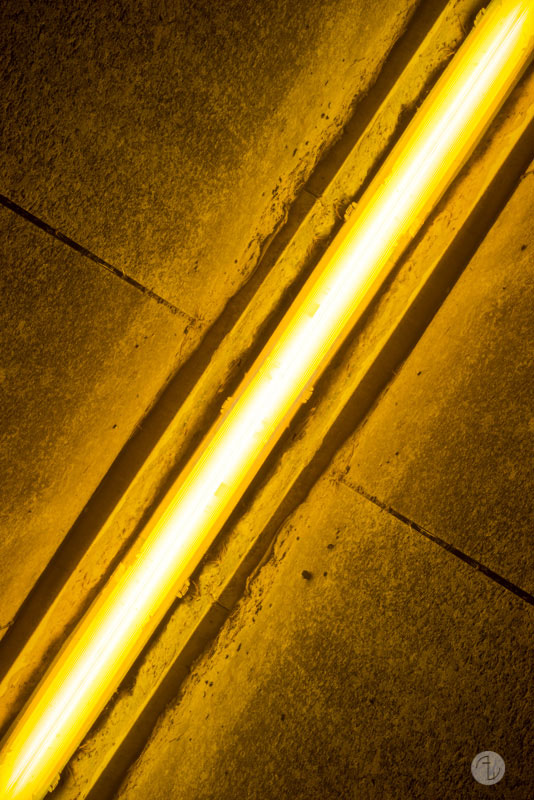
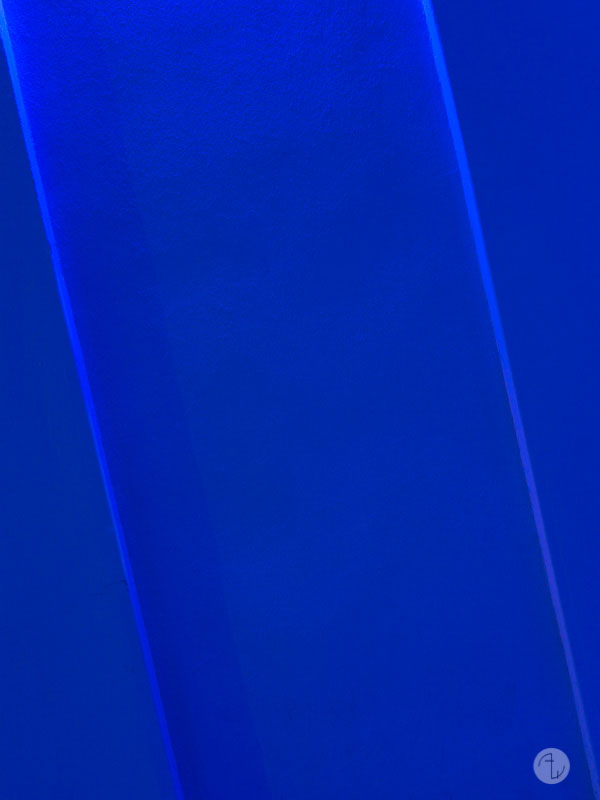
In this photographic series, Amaury Wenger explores the poetic and narrative interplay between place and light. His images are a study in contrasts, not only between brightness and shadow, but also between the cool precision of geometric structures and the blurred organic shapes of night-time. The original inspiration came from nocturnal walks, when the city becomes a mirror reflecting humanity's interaction with light. Streetlamps cast sharp, linear shadows, and neon signs glide across wet cobblestones in the form of floating rhombuses and circles. However, the more Wenger wandered, the more he noticed the omnipresent garish advertising and its perpetual imperative to consume, which even extends to nature. The transformation of a tree into a restaurant's advertising panel marks the climax of the capitalist transformation of nocturnal urban space. Darkness permeated by artificial light becomes the setting for dystopian scenarios.
A play of concealment and displacement emerges between glaring neon advertisements and dark alleyways: daylight appearances yield to artificial light sources that exaggerate contours and alienate forms. In Wenger's images, architecture becomes a sharp-edged silhouette and stair railings turn into rhythmic shadow lines that score across façades like musical staves. Here, light is not a gentle veil, but an active shaper. It chisels spaces from darkness, reveals layered depths and stages the city as a theatre of illumination.
Using his camera, Wenger captures moments of light that oscillate between reality and abstraction. Sometimes it's the blinding rectangle of a shop window that reduces a passer-by to a ghostly streak, and at other times it's the pale oval of a street lamp that hovers like an alien moon above a brick firewall. These images resist singular interpretation; they are simultaneously documentary and dreamlike, precise in detail yet brimming with open questions. Viewers must decide whether to surrender to the aesthetic effect or focus on the underlying narrative. Perhaps the true poetry lies in this very liminal space, in the flickering between explanation and enigma.